
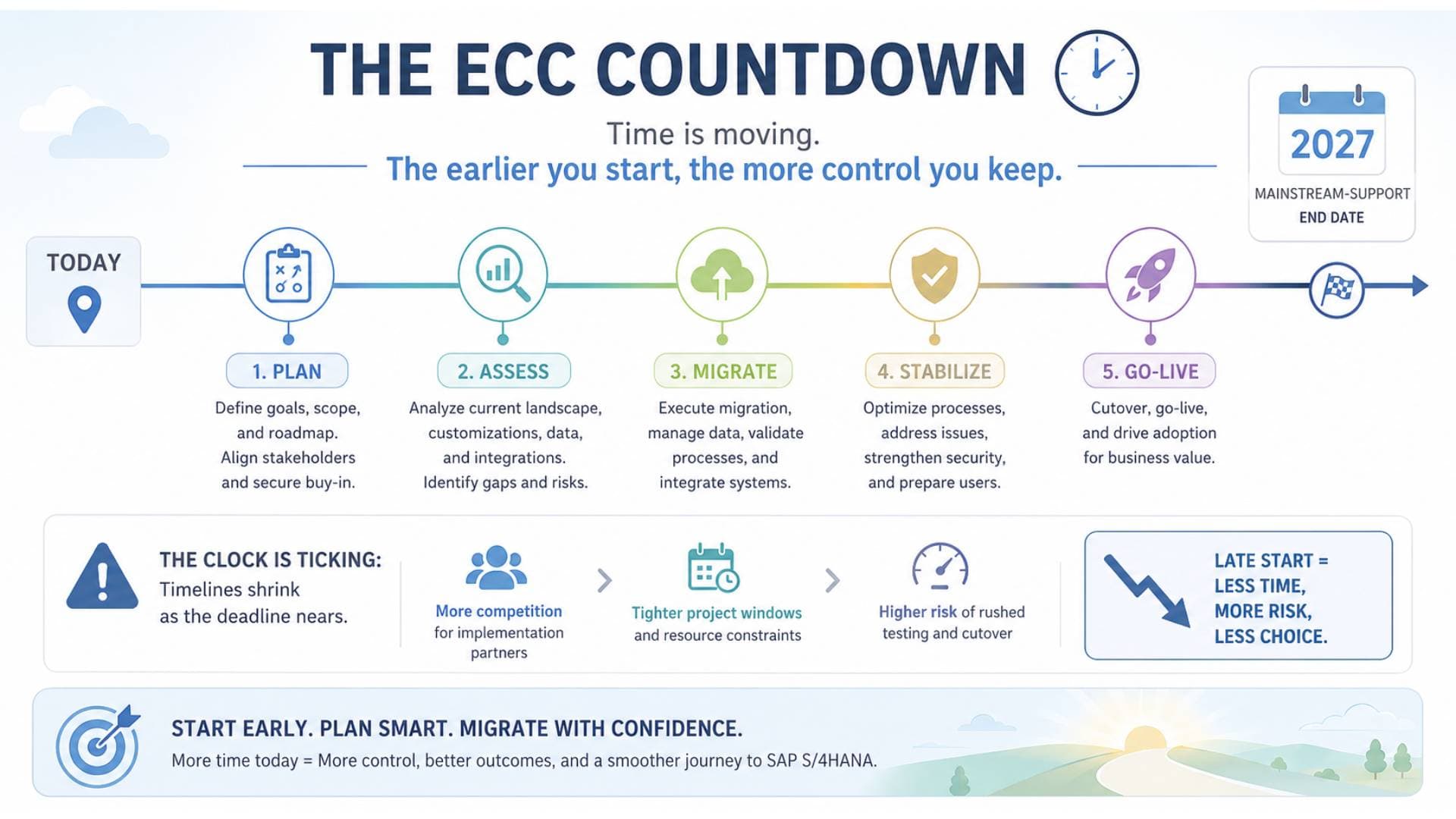
There’s a number every plant manager, IT head, and CFO in Indian manufacturing has probably heard by now 2027. It’s the year SAP’s mainstream support for ECC formally winds down. Most people nod, note it, and go back to the fire in front of them: production targets, supply chain hiccups, that one machine on the shop floor that keeps throwing errors.
But here’s the thing about ERP deadlines they don’t feel urgent until they suddenly are.
The quiet pressure building in the background
If you’re running SAP ECC today, you’re not alone. It’s still the backbone of a huge share of India’s manufacturing sector from ceramics and cables to steel, F&B, and industrial components. It works. It’s familiar. Your teams know it inside out.
Which is exactly why the move to S/4HANA feels less like an upgrade and more like uprooting something that’s been holding the business together for a decade or more.
The real pain isn’t the software change itself. It’s everything wrapped around it:
- Production can’t pause. Manufacturing doesn’t get a “maintenance window” the way a retail app does. Order-to-cash, inventory, shop floor integration all of it has to keep running while the ground shifts underneath.
- IT teams are already stretched. Most mid-size manufacturers don’t have a bench of spare SAP consultants sitting around waiting for a multi-year migration project.
- One missed integration = a very expensive Monday. ERP touches procurement, production planning, finance, and often supplier and customer portals. A single regression slipping through can ripple across the whole operation.
- The clock doesn’t negotiate. Whatever internal priorities are competing for budget and attention this year, the support-window countdown keeps moving regardless.
None of this means panic. It means the smart move is starting the conversation early while there’s still room to plan properly instead of scrambling later.
The ECC Countdown
What actually makes a migration risky (and it’s usually not the part people expect)
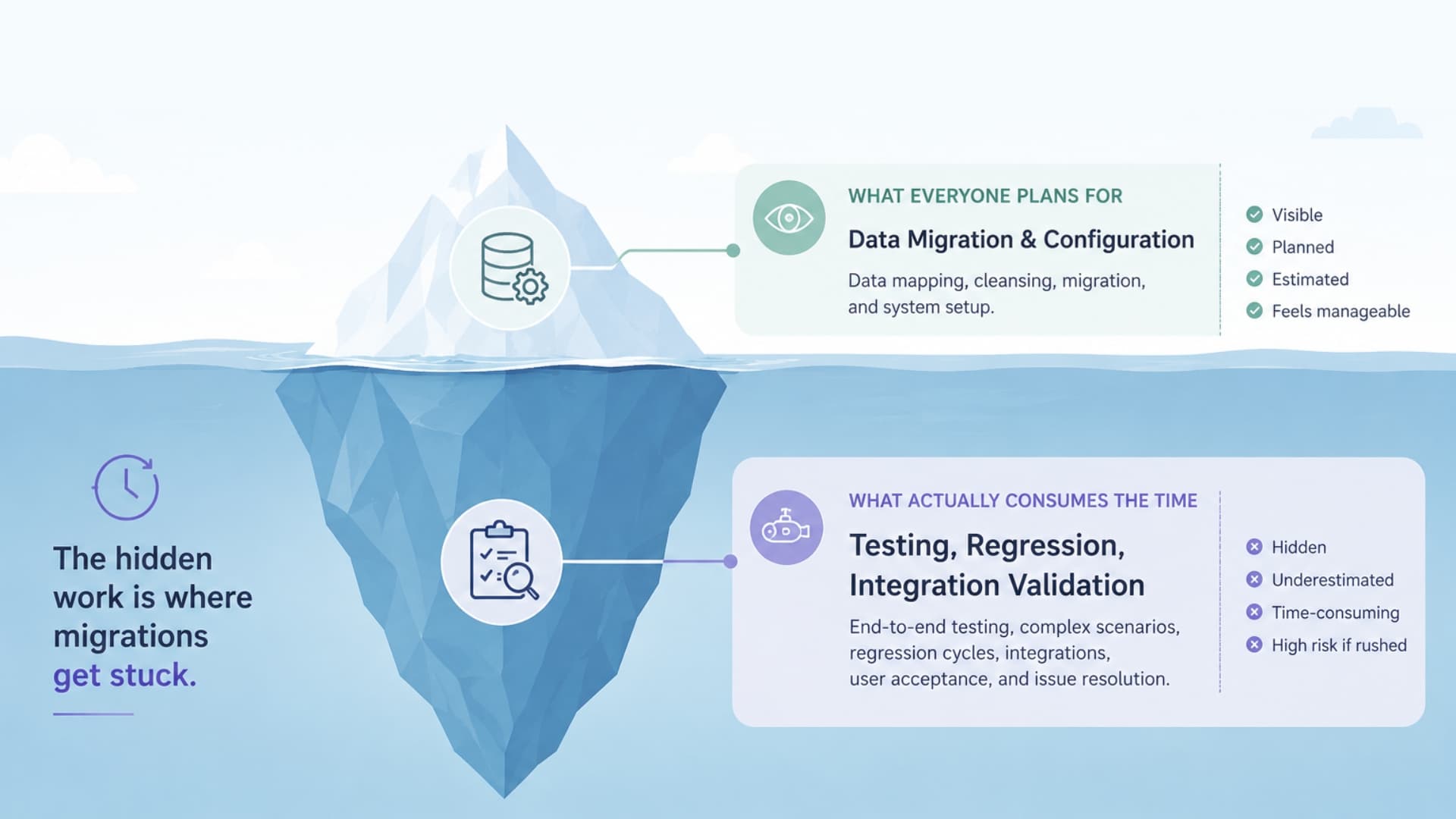
Ask most teams what worries them about an SAP move, and they’ll say “the migration.” But the migration itself moving data, configuring the new environment is a well-trodden path at this point. What actually derails timelines and budgets is almost always what happens after the switch is flipped:
- Processes that worked fine in ECC behaving differently in S/4HANA
- Interfaces to MES, WMS, or supplier systems breaking quietly
- Manual regression testing eating weeks because someone has to click through hundreds of scenarios by hand
- Go-live delays because nobody’s confident enough to sign off
This is the part that rarely makes it into the boardroom slide, but it’s where most of the real cost and stress lives.
Where Migrations Actually Get Stuck
The shift happening quietly across the industry
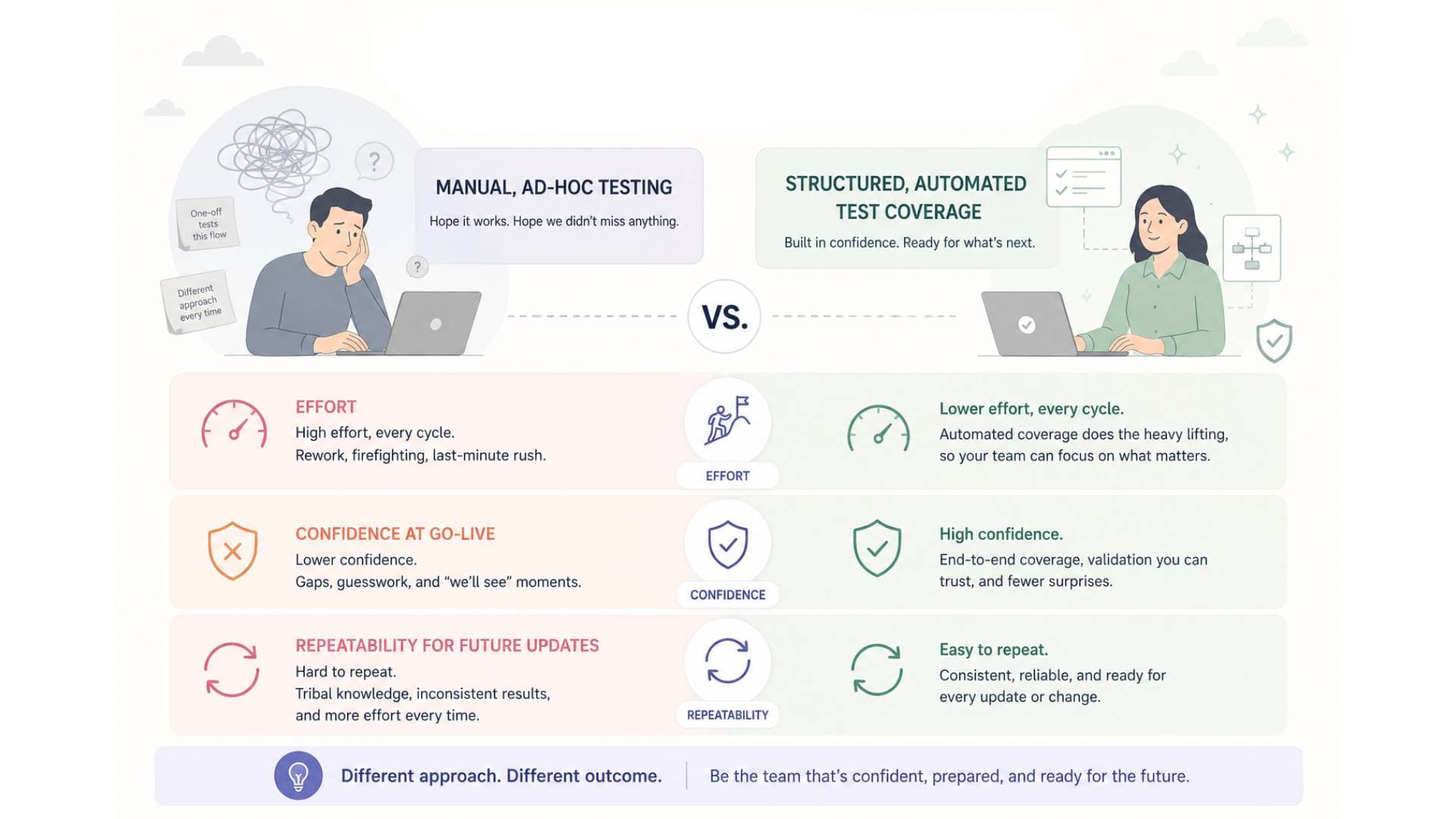
Manufacturers who’ve been through this or who are watching peers go through it are increasingly treating testing and validation as a parallel workstream from day one, not an afterthought squeezed in before go-live. Instead of manual regression cycles that depend on a handful of people’s tribal knowledge, more teams are building automated, repeatable test coverage that can be re-run every time a process, integration, or patch changes.
It’s a small mindset shift with a big payoff: migration stops being a single high-stakes event and starts being something you can validate continuously, with confidence, at your own pace.
That’s really the heart of it not rushing the move, but making sure that when you do move, you’re not relying on hope and long weekends to catch what breaks.
Two Ways to Get Ready
Where to start, without boiling the ocean
If 2027 has been sitting on a slide in the back of someone’s mind, here’s a grounded way to bring it forward without triggering a full-blown project yet:
- Map your critical processes the ones that would actually hurt production if they broke during cutover.
- Get a realistic view of your current testing effort how much of it is manual, and how much institutional knowledge lives in a handful of people’s heads.
- Talk to teams who’ve done this not for a sales pitch, but to understand what surprised them.
- Build a testing plan alongside the migration plan, not after it.
None of this requires committing to anything today. It just requires starting the conversation before the deadline starts making decisions for you.
“The factories that come out ahead aren’t the ones that moved first, they’re the ones that moved ready.”
— Eti Gautam
2027 will arrive whether you’ve planned for it or not. The only real choice is whether your team gets there having quietly derisked every process along the way, or scrambling in the final stretch, hoping the go-live weekend goes better than expected.
You don’t have to map this out alone. If you’re weighing where to start or just want a second set of eyes on how ready your systems and processes really are, it helps to talk it through with people who’ve seen this journey up close, across both the testing side and the automation side of the equation. Talk to our experts - a short conversation now could save you the scramble later.